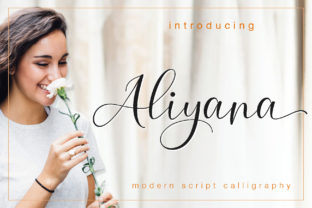
Aliyana Script: A Designer’s Honest Take
As a designer with years of experience working on brand identities, packaging, and digital assets, I’ve come across many script fonts. Aliyana Script stands out for its natural flow and emotional tone. It feels like a handwritten signature that’s been carefully refined for design use. But like any tool, it has its place—and its limitations.
The First Impression: Warmth and Personality
Aliyana Script immediately conveys a sense of warmth and authenticity. The strokes are fluid, the curves soft, and the overall look feels personal. It’s not overly ornate, but it carries a subtle elegance that works well in both modern and traditional contexts. This font doesn’t shout—it whispers, which makes it ideal for projects that need a human touch without being too flashy.
It’s perfect for branding that wants to feel approachable, like a boutique coffee shop, a handmade craft brand, or a lifestyle blog. The mood is friendly, yet professional enough for commercial use. However, it’s not a one-size-fits-all solution.
Real-World Use Cases: Where It Shines
In logo design, Aliyana Script can be a great choice for a custom mark that needs a personal flair. It pairs well with minimalist icons or geometric shapes, creating a balance between handcrafted and clean. For brand identity, it adds a unique personality that can help differentiate a business from competitors.
When used in packaging design, it works best for short phrases like product names, taglines, or labels. It adds a tactile, artisanal feel that resonates with consumers looking for something authentic. On merchandise such as t-shirts, mugs, or stickers, it brings a casual, expressive vibe that’s easy to recognize.
In editorial design, Aliyana Script can serve as a decorative element, especially in headers or pull quotes. It’s not ideal for body text, but when used sparingly, it enhances visual storytelling. For social media graphics, it adds a personal touch to captions, banners, or promotional posts, making content more engaging and relatable.
For web design, it’s best reserved for headings or standout elements. Using it for body copy would risk readability, especially on smaller screens. In digital ads, it can be effective for headlines or call-to-action buttons, drawing attention without overwhelming the viewer.
Where to Use It Carefully
Aliyana Script isn’t the best choice for large headlines where clarity is essential. Its flowing style can become difficult to read at scale, especially in low-resolution environments. Similarly, it’s not ideal for brand marks or logos that require sharp, clean lines. If you’re designing a premium packaging piece, consider how the font will look under different lighting conditions and print settings.
For social posts, it’s better to pair it with a sans serif or serif font for contrast. Using it alone can make the message feel less structured. In supporting text, like footers or captions, it may not convey the same level of professionalism as a more standard typeface.
Readability and Brand Consistency
Readability is one of the most important factors when choosing a font. Aliyana Script is readable at larger sizes, but at smaller sizes—especially in black and white—it can lose clarity. Designers should test it in various contexts, including mobile views and print mockups, to ensure it meets their needs.
Brand consistency is also key. If a brand uses multiple fonts, Aliyana Script should complement them rather than clash. It works well as a secondary font alongside a sans serif or serif typeface. When paired with a display font, it can add visual interest without overwhelming the design.
Audience trust and recognition are influenced by how a font is used. Aliyana Script can help build a warm, trustworthy image, but overuse or poor pairing can dilute that effect. It’s important to maintain a clear hierarchy so the message remains legible and impactful.
Practical Designer Notes
Before finalizing any project, test Aliyana Script in black and white. Sometimes, the contrast can reveal issues that aren’t obvious in color. Check small-size readability on different devices to ensure it works across platforms.
Try it on real mockups—whether digital or physical—to see how it interacts with other design elements. Compare uppercase and lowercase forms to understand how they affect spacing and balance. Test it beside other font styles, like serif, sans serif, or display fonts, to find the best pairing.
Ensure you have proper commercial licensing before using it in client work or business projects. Some fonts have restrictions that can limit your creative freedom. Always confirm the license terms to avoid legal issues down the line.
Final Thoughts: Is Aliyana Script Right for You?
Aliyana Script is a versatile, expressive font that can add character to a wide range of design projects. It excels in areas that benefit from a personal, handwritten touch, such as branding, packaging, and social media. However, it requires thoughtful use to maintain readability and visual harmony.
If you’re looking for a premium font that brings warmth and personality to your designs, Aliyana Script is worth considering. Just remember to use it wisely and pair it with other fonts that support your overall design strategy.